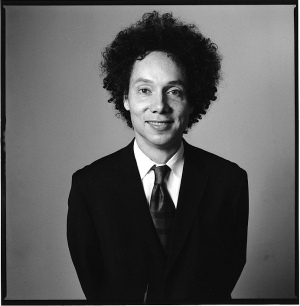
First off, I am so glad that Gladwell's "The Tipping Point" was chosen as one of the books to study and discuss. I had heard about how interesting all of Gladwell's (the crazy looking man with the odd hair to the left)books were in the past (including "Blink," and "Outliers," the latter of which I plan on reading next,) but for some reason never picked any of them up to review myself. I'm glad that this class gave me an excuse to.
Right off the bat, I love Gladwell's style of writing and the ideas that he presents are totally fascinating. In a nutshell, all of Gladwell's books are about life and how things work out and why. Further than that, they are hard to explain to someone who never read them what the underlying idea or thesis is. For "The Tipping Point," it centers around trends and why some things "hit" at the right time and become smashing successes, and how some things "miss" and why that is. 

The cool thing about "The Tipping Point" is that Gladwell tries to make his cases for his various theories by using real life examples. In the first few pages, he discusses the success of Hush Puppies- weird shoes that set off a crazed fad in the 1980's and then later fizzled away.
The tipping point from the title comes into play where he tries to explain the key moments of exactly WHEN and WHY certain things happen- such as the Hush Puppies craze, or something darker like the spread of syphilis. He goes onto outline three rules of these tipping points, which include Law of the Few, the Stickiness Factor and the Power of Context. In reading about these rules, I couldn't help but think to apply it to certain fads and things that are "hot" today including Facebook and Twilight. In looking at those specific examples, one can find exactly how and why they "hit" using Gladwell's there rules.
Gladwell employs various other examples to illustrate his point, including SESAME STREET (which, according to him, was a change in the way children's television was produced,) and the decline of violence on the mean streets of New York City throughout the 1990's (where he says small changes made the difference, instead of sweeping ones- arguing that sweeping change doesn't always work like a charm.)
Thanks so much for reading. PART TWO coming in the next day or two...
RL


No comments:
Post a Comment